Email Us

Bookings and Support


Goa’s culinary identity goes way past those usual tourist menus, like it’s really a mix of indigenous Konkani food ways and more than four centuries of Portuguese hanging around. The local gastronomy sort of holds together the heat from red chillies with the cooler, smoother side of fresh coconut, and then also adds that sharp little tang from local vinegar. So if travellers are a travelling, a food nut, or someone trying to understand culture in general, getting genuine Goan food means looking at the history first, then the basic pantry stuff, and finally the regional dishes that make this coastal place stand out.
The punchy flavour profile in Goan cooking comes from a long-ago fusion, where Konkani techniques meet Portuguese colonial rule. The Portuguese brought over ingredients that sort of rewired the daily diet—potatoes, tomatoes, pineapple, cashews, and, honestly the big one, chilli peppers. They also pushed preservation habits that stuck, especially the heavy reliance on palm and coconut vinegars, not just the usual kitchen acids.
Goan main courses are known for their layered aroma and very exact spice balancing, like nothing feels accidental.
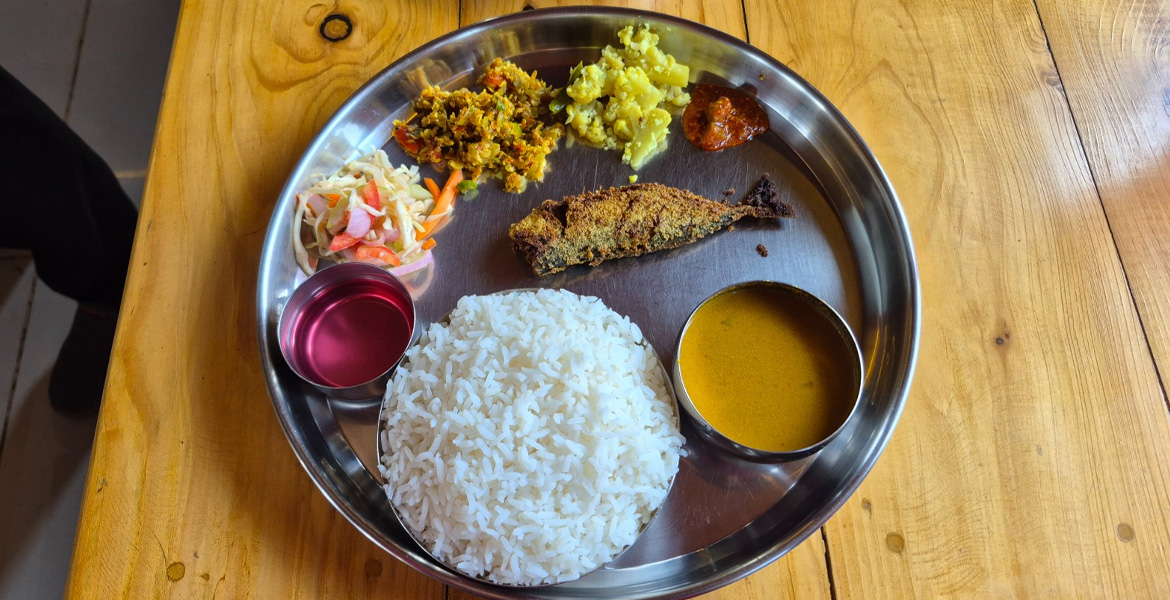
This is the centrepiece of home-style Goan cooking, and it’s usually made with kingfish or mackerel. The gravy starts with a paste of grated coconut, dry red chillies, coriander seeds, turmeric, and garlic, and then gets “brightened” by tart tamarind or kokum. It’s typically served hot, right over boiled red parboiled rice, so the rice drinks in the sauce, kind of.
Xacuti sits in that category of complex curries, where the spice work is the whole story. The process uses dry-roasting a careful mix of whole spices—star anise, nutmeg, poppy seeds, cinnamon, dried red chilies—then adding sliced onions and grated coconut. After roasting, traveller end up with that dark paste, and simmer it with chicken or mutton. The result is heavy, deeply fragrant gravy, almost sweet-savoury, depending on the cook.
People often think it’s just an aggressively hot pork meal, but the real thing traces back to Portuguese vinha d'alhos, aka garlic and wine-vinegar marinade. Pork cubes get marinated overnight in red chili paste, garlic, ginger, and sharp palm vinegar, then cooked slowly. Traditional Goan versions usually skip potatoes, and yeah, the name points straight to the marinade parts more than anything else.
Prawn Balchão works a bit like a savoury seafood pickle, more than a normal curry. It’s tied to early trade days, and it still carries that punchy, matured flavour. Big, plump prawns are tossed in a pungent paste of vinegar, fiery chilies, onions, and fermented shrimp paste. Since it’s built with lots of vinegar and oil, it’s commonly done in batches, then left to mature so the taste can settle and intensify, over time.
Meals are often matched with classic oven baked goodies and side dishes made to behave well with heavy gravies, like they’re naturally tuned for it.
Goan desserts tend to mirror the Catholic baking legacy, leaning on eggs, coconut milk, and jaggery, again and again.
Bebinca is often seen as the real signature of Goan baking. It’s a thick, multi layered coconut cake. Made with plain flour, egg yolks, coconut milk, sugar and ghee, each layer gets baked on its own, then another layer is poured over after— so the structure turns rich and dense, and yes it was, traditionally kept for special get together.
Patoleo feels like a monsoon memory. It’s a rustic sweet with a spiced centre made from freshly grated coconut and dark palm jaggery, perfumed with cardamom. The filling is tucked inside fresh turmeric leaves, and then steam cooked, so the leaf gives off that earthy aroma along the way.
Feni is distilled locally from fermented cashew apples (Cashew Feni) or coconut sap (Coconut Feni). It’s a strong regional spirit with a very specific fragrance, and it also carries protected geographical status. People usually drink it straight, as an aperitif, or they mix it with lemon and soda, depending on the night.
Goa’s dining scene reads like an on-going conversation between old roots and newer tastes. Even if the beach shacks near the road still do fish thalis and fried seafood with no fuss, many restaurants across the state keep reworking older recipes using more current techniques. Still, the core holds: Goan cuisine remains its own clear culinary tradition, shaped by coastal geography and centuries of cultural exchange.