
Email Us

Bookings and Support


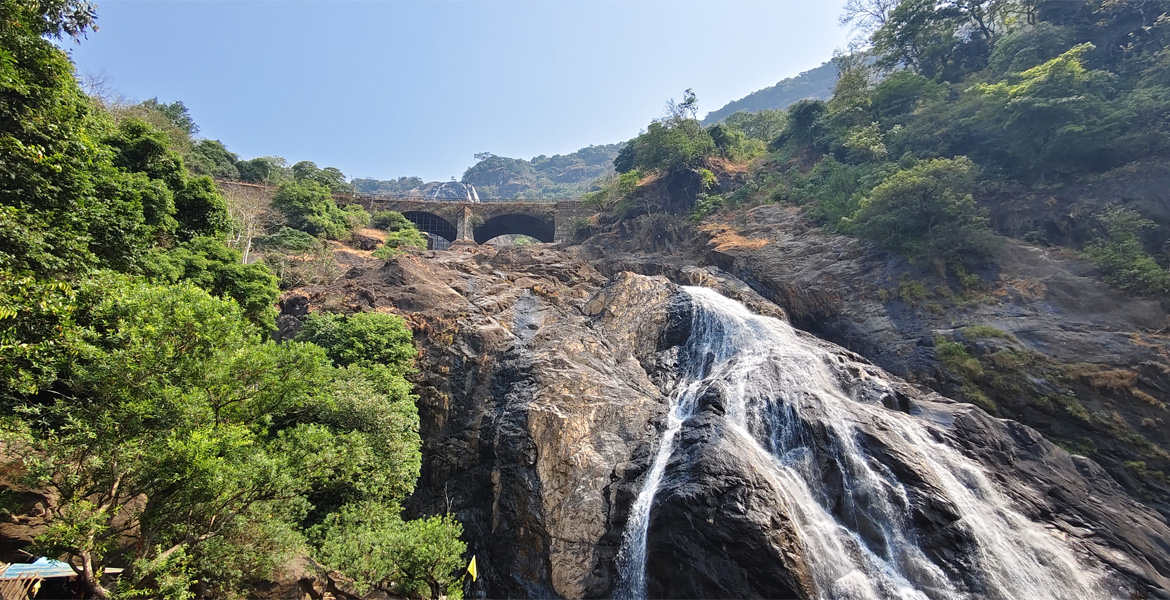
Tucked near the Goa-Karnataka boundary, in those lush Western Ghats, Dudhsagar Falls feels like one of India’s most jaw-dropping natural spots. It’s a four-tiered waterfall and it drops from well over 300 meters, so traveller get this thick, almost milky white ribbon of water moving down against dense tropical trees rocky ledges. People come here year round, mostly nature lovers, shutterbugs, trekkers and holiday crowds even though it still feels kind of untouched.
Since it sits inside the Bhagwan Mahavir Wildlife Sanctuary, Dudhsagar gives traveller a different flavour than Goa’s usual beach mode. Around there, traveller will notice rainforest views, spice farms, small scenic villages, plus riverside getaways, which makes it a solid choice for villa vacations, eco-tourism and those “let’s just go for a weekend” trips.
Dudhsagar becomes extra intense during monsoon, when heavy showers turn the falls into this loud roaring drama. After the monsoon and in winter, the landscape stays glossy green and lively, so it’s easier to plan sightseeing days, jeep safaris and trek routes through the forests.
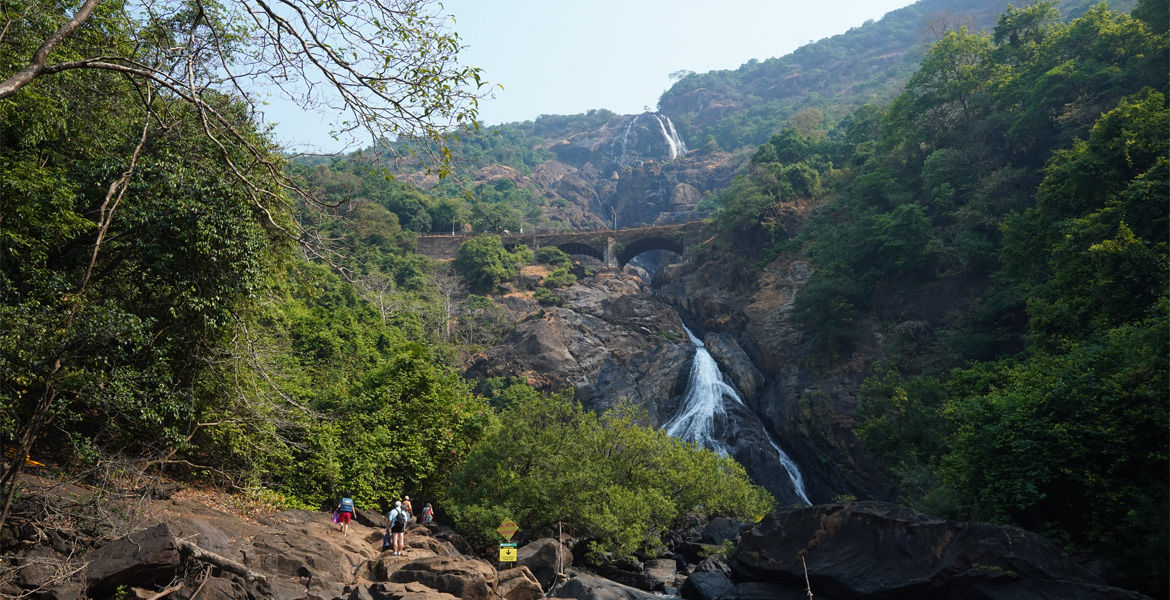
Getting there is also pretty flexible. Some folks go by jeep safari from Kulem, others take trekking paths using forested railway tracks, it depends on what vibe traveller want, slow and steady or more adventurous. The place also has plenty of wildlife energy, with tropical birds, monkeys, butterflies and native plants all around, so the sanctuary still feels ecologically important, not just scenic.
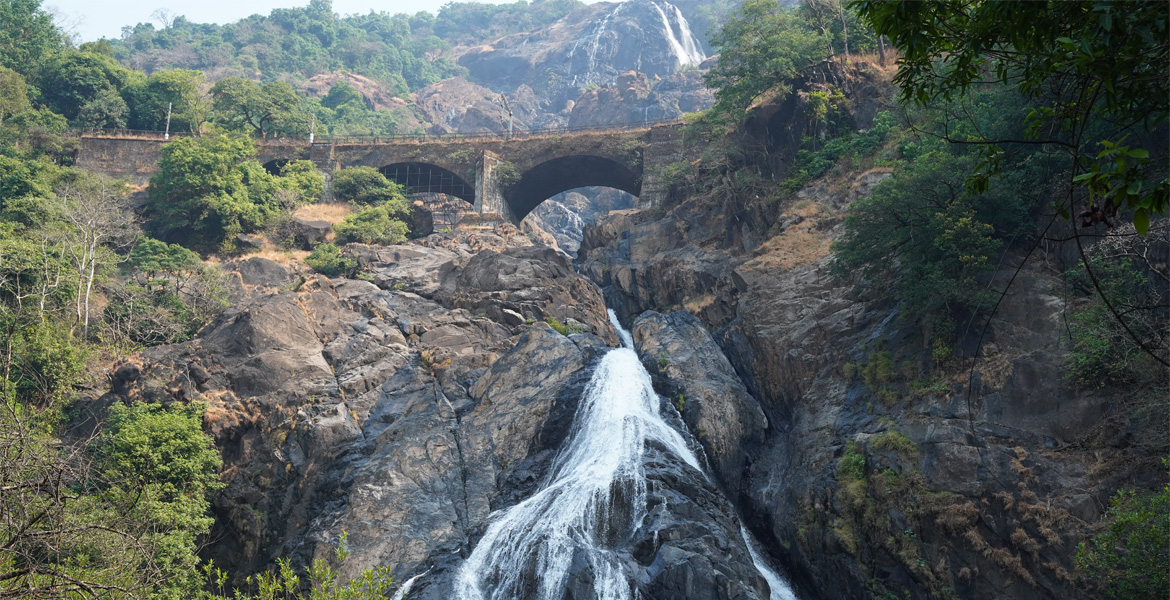
At the base, the natural pools invite traveller to pause a moment, relax a little and take photos. Yes, that railway bridge crossing over the waterfall is one of the most photographed frames across Goa, people always stop there, again and again.
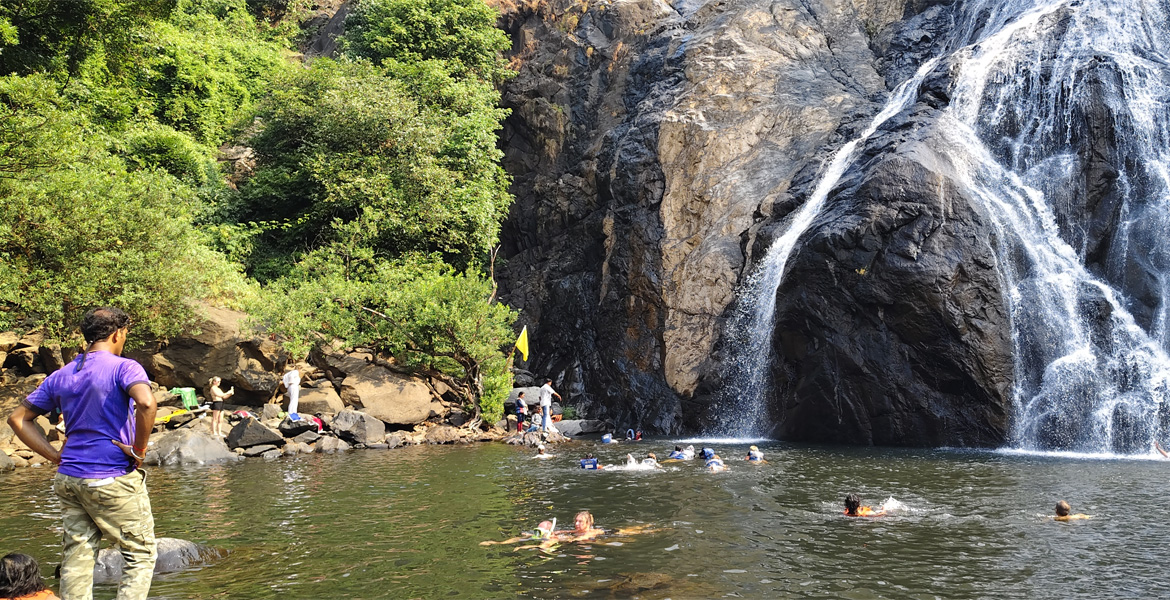
Dudhsagar region has a lot going on nearby and it sort of, improves the whole travel vibe. Traveller end up moving through quiet greenery and then suddenly there is a viewpoint. It feels a bit expected sometimes, but in a good way.
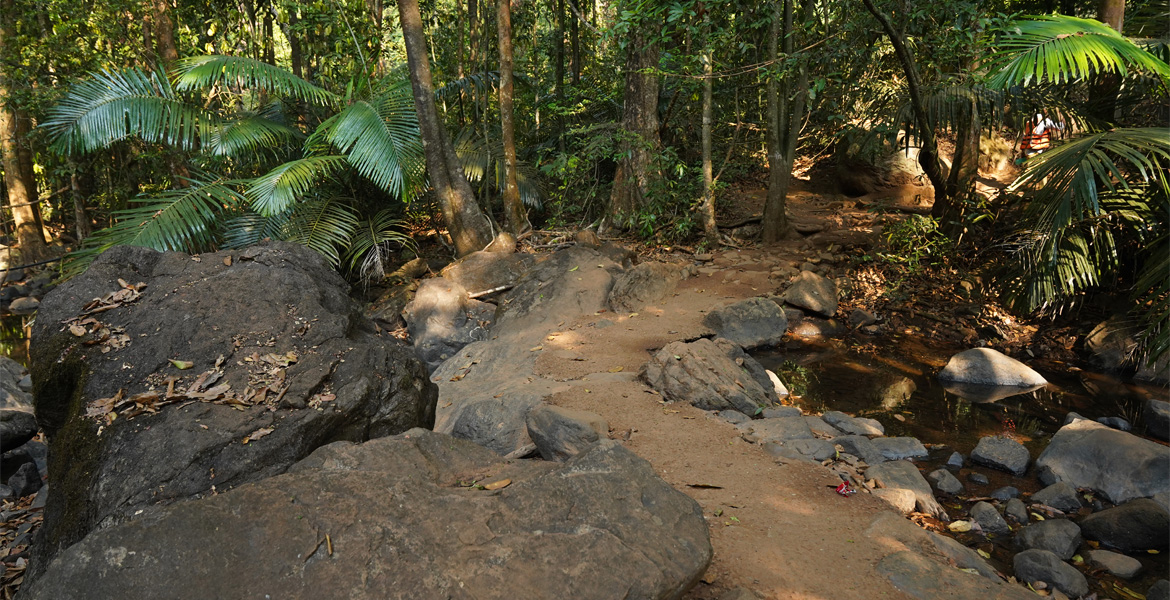
Bhagwan Mahavir Wildlife Sanctuary is Goa’s biggest protected wildlife reserve; also it’s where traveller can spot many types of flora and fauna. Thick forests, walking paths and pretty outlook points are why eco-tourists and wildlife lovers keep coming here.
Mollem National Park sits inside the sanctuary area, and it brings in a rich mix of plant and animal life. There are also scenic trekking routes, so it works well for jungle outings. People go for bird watching and for photography tours too.
Tambdi Surla Temple is a classic 12th-century Shiva temple, tucked away in Goa’s forested hills. It was built with Kadamba-style architecture and honestly it’s considered one of the best medieval craftsmanship examples in the state.
Spice plantations near Ponda and Mollem offer guided tastings, like a guided tour of how cardamom, pepper, nutmeg, vanilla and cinnamon are grown. Many plantation visits also include traditional Goan meals, plus small cultural performances.
Adventure seekers often head to Devil’s Canyon. It’s this dramatic rocky gorge, linked with local stories and pretty river formations. Guided tours usually explain the geology and also the folklore around the place.
Around Dudhsagar, dining leans toward authentic Goan food, local seafood and that classic countryside flavour. Traveller will notice people keep it simple, but still tasty.
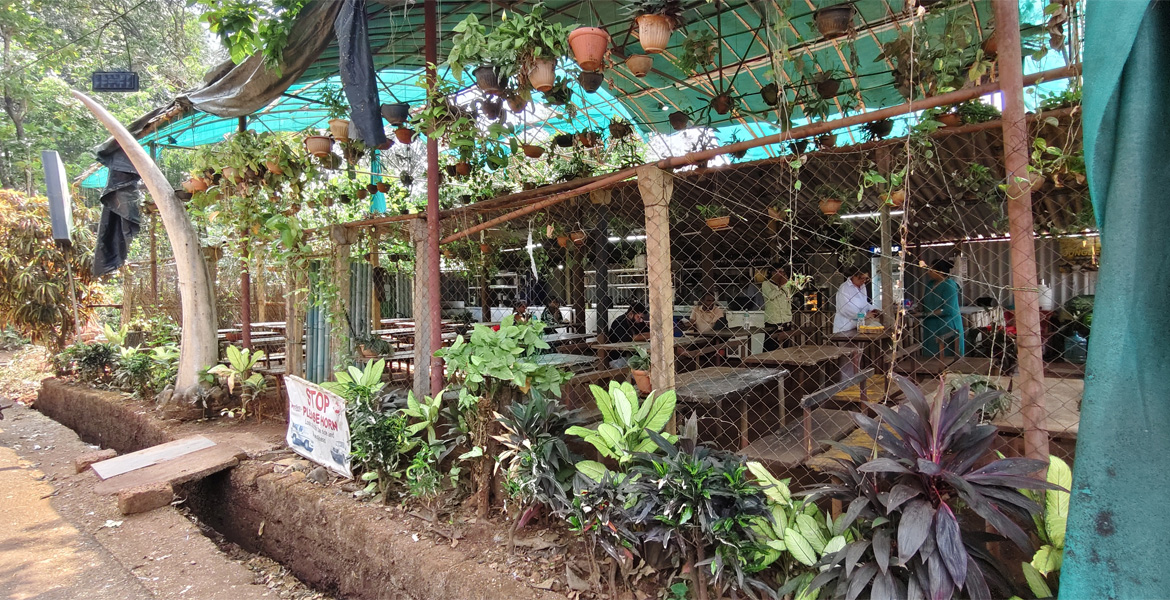
A bunch of plantation estates run restaurants where they serve fresh Goan thalis. Traveller might get fish curry rice, prawn dishes and also vegetarian options that taste stronger thanks to spices grown nearby.
Some riverside cafes and eco-resorts close to Mollem create meals with a view. Forests and flowing streams are basically the backdrop and the focus stays on regional comfort dishes, plus organic ingredients.
In the nearby villages, smaller family-run places cook at home. Traveller can find xacuti, cafreal, sorpotel, vindaloo and even bebinca desserts. The rustic seating and traditional cooking style make it feel very real, not touristy.
Dudhsagar is mostly about nature and winding down, so nightlife isn’t the main thing. Still, nearby towns and eco-resorts have relaxed evening options.
Many villas and jungle resorts have private bars and open-air lounges. Traveller can order cocktails, local spirits and sometimes live acoustic music shows as well.
Bonfire evenings near forest stays are a common traveller choice. People go for those calm night-time moments, with live barbecue dinners, folk music and stargazing. It becomes one of those slow, comfortable countryside scenes.
If travellers stay longer, many travellers pair Dudhsagar with trips toward South Goa’s beach areas. Then traveller gets beach clubs, cocktail bars, and live music venues and the energy feels livelier.
The Dudhsagar area is great for outdoor activities, especially if traveller like adventure or traveller enjoy being around nature.
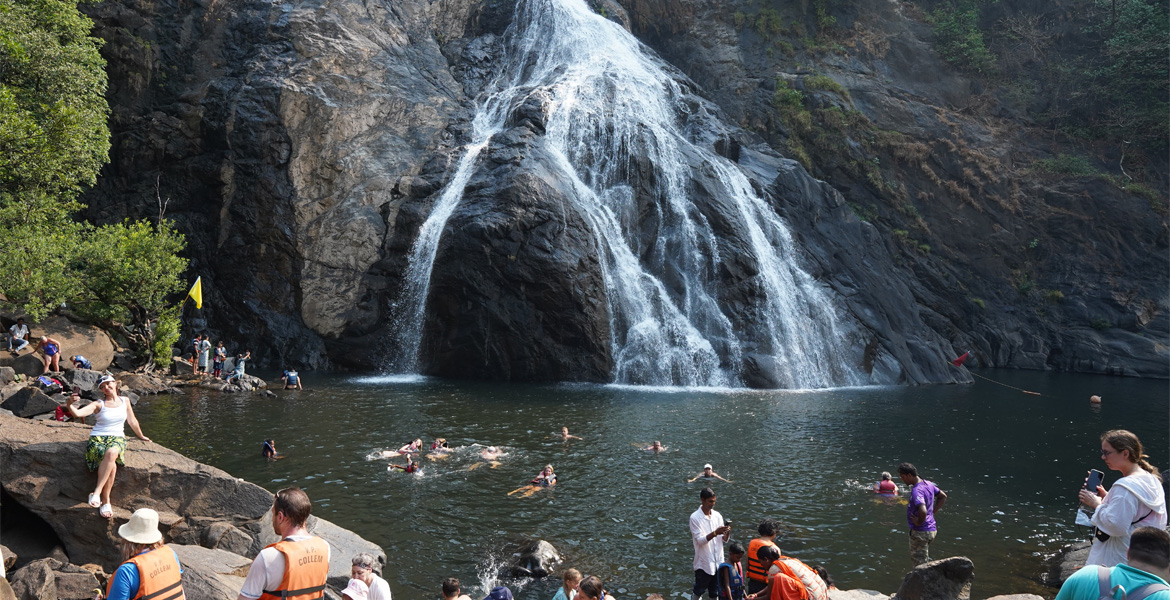
Popular activities include:
Monsoon tourism has grown a lot too and travellers visit in particular to catch the waterfall at peak flow. It’s one of those seasons where everything feels louder and wetter, in a memorable way.
June to September is the monsoon season, and that’s when Dudhsagar looks most dramatic. But, access can sometimes be limited when rains get heavy. October to February usually feels best for trekking, sightseeing and even villa stays, because the weather is comfortable and the greenery stays super lush.
Summer months are calmer, too. Traveller may find quieter stays and villa rental rates can be more attractive for travellers wanting a peaceful retreat among trees, birds and distant river sounds.
Dudhsagar shows a completely different side of Goa. It’s not really about beach lanes or nightlife districts. Instead, traveller get towering waterfalls, dense forests, wildlife sanctuaries, eco-friendly villas and that authentic village culture that sits right in the background. From forest plantation getaways to adventure packed excursions and riverside dining, Dudhsagar gives traveller an immersive break into Goa’s scenic hinterland. It still keeps things easy, since traveller can reach some of the most remarkable natural attractions without too much hassle.
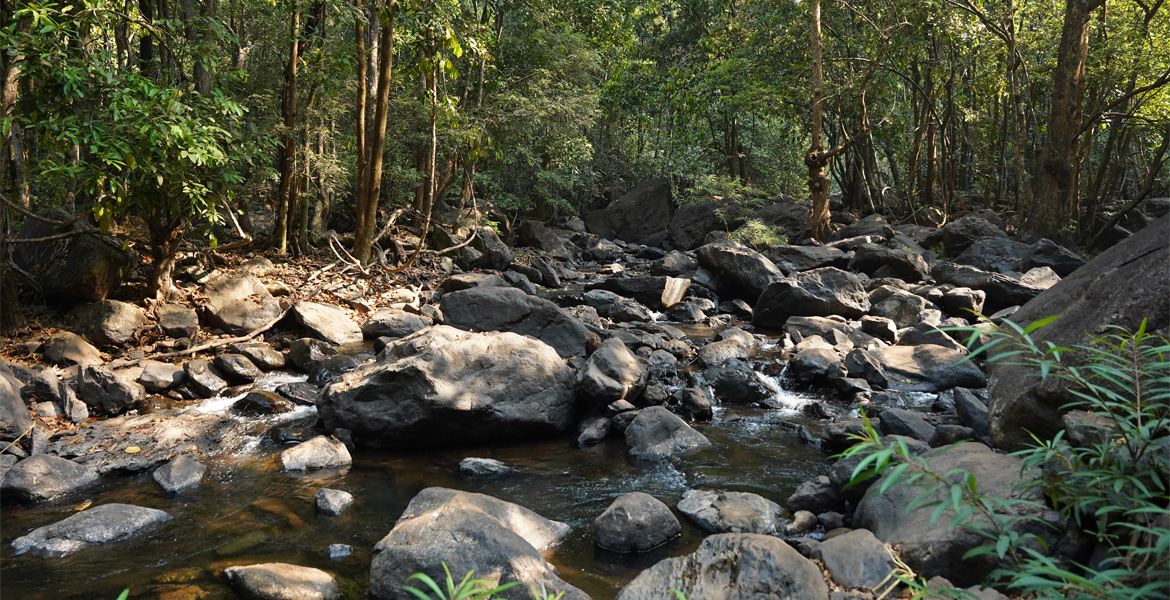
Staying near Dudhsagar usually means quieter luxury, with Forests Rivers, spice farms and countryside scenery all around traveller. Compared to the busy North Goa coastline, this belt feels more about peace, wellness and nature-centred experiences, even if traveller is traveling with family.
Riverside villas around Mollem and Kulem often come with private settings, tropical gardens, open terraces and direct views into thick greenery. Some of these places have larger living spaces, private pools, outdoor dining corners and that classic Goan inspired style, simple but warm.
A lot of villa hosts target families and groups who want privacy away from crowded tourist hotspots. The calmer atmosphere makes these rentals pretty good for yoga retreats, eco-friendly holidays and longer stays where travellers just breathe easier.